
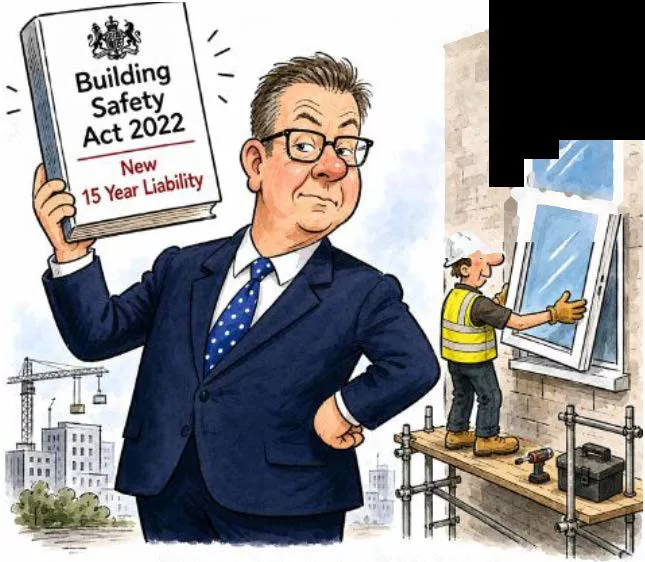
The Chamber believes the Building Safety Act 2022 extends the liability of small contractors beyond what is proportionate. The Government, it seems, has its own reservations – several provisions remain unenacted, apparently out (concern for the impact on new housing supply). Since the Act passed, the Master of the Rolls, Sir Geoffrey Vos, has warned that Al will dramatically increase civil claims. The Law Society has also revised its TA6 Property Information Form to require disclosure of any alterations or building works carried out in the preceding decade, with disclosure becoming a permanent part of the conveyancing record. The Act introduced a fifteen year window for claims making these developments bite harder. Moreover the fifteen year liability now extends from new builds to repairs and alterations to existing buildings, an potential claimants now include anyone who acquires the property. To claim, a claimant must for now show the property is uninhabitable and the cause traceable to defective work. That threshold is understandable- the standard 6 year limit was never well suited to latent defects that take years to appear. However, ‘uninhabitable’ carries a wider legal meaning than its everyday use implies, encompassing persistent damp, defective drainage, inadequate heating or structural instability and what the courts consider to make normal occupation unreasonable will inevitably change. Detailed records have become indispensable for any contractor seeking protection against liability for defects not of their making. However concealed work that fails after the fact – a slowly weeping joint beneath the floor can generate repair costs that dwarf the original contract sum. Public liability insurance is the conventional safeguard, but the Chamber doubts it answers the problem under the 15 year regime. Current policies cover current activities, not necessarily the type of work that caused the problem. Many contractors will have closed before their liability ceases. Worse for the self-employed, liability survives both the business and the individual passing to their estate on death, potentially restricting payments to beneficiaries. Parliament may have failed to anticipate the gravest consequence. Extending the Defective Premises Act to cover repairs and alterations means that. contractors working years apart can find themselves jointly and severally liable for one another’s mistakes. That makes it hard or impossible to determine an adequate sum Insured. The Chamber’s concern is that the ACT has created liabilities that cannot be fully insured at any affordable premium. When civil exposure outstrips available cover, the burden is not regulatory, it is existential. Unlike limited company contractors, the self-employed, a major part of the industry, have no backstop for the liabilities the ACT has created. The chamber recommends they take accountancy advice on whether incorporation is now a prudent response. Parliament might reflect that the standard of workmanship it now demands of small builders is not obviously evident in the legislation itself. The chamber is planning a seminar to help local builders understand what’s changed. Register your interest: ku.gro.yrubdus@ofni

Author: John Wiseman
Bio